
Corrosion of Stainless Steel
Understanding the Different Types and Protective Treatments
Although stainless steel is renowned for its corrosion resistance, it can still be affected by various forms of deterioration in aggressive environments. To ensure its durability and effectiveness, several surface treatments are available to enhance corrosion resistance. In this article, we will explore the different types of corrosion that can affect stainless steel, as well as the most commonly used protective treatments to prevent or minimize these issues. These treatments include electropolishing, pickling, and passivation, each with its own methods, advantages, and disadvantages.
1. Uniform or General Corrosion
Uniform corrosion is a type of metal degradation characterized by a regular and homogeneous attack of the surface exposed to a corrosive environment. It typically occurs in the presence of moisture, acids, or other chemical agents and results in a gradual and consistent loss of thickness across the entire metal surface. Although predictable and easy to measure, it can compromise the mechanical strength of a material over time if not properly monitored. Prevention relies on selecting suitable materials, applying protective coatings, and performing regular maintenance.
2. Pitting Corrosion
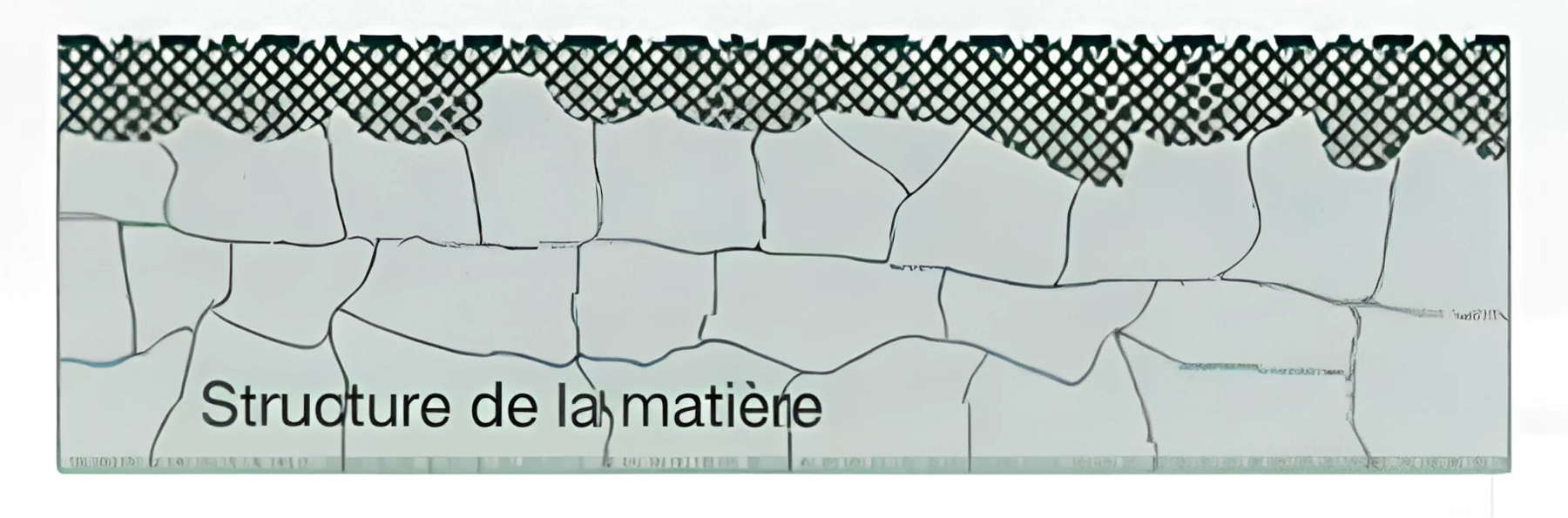
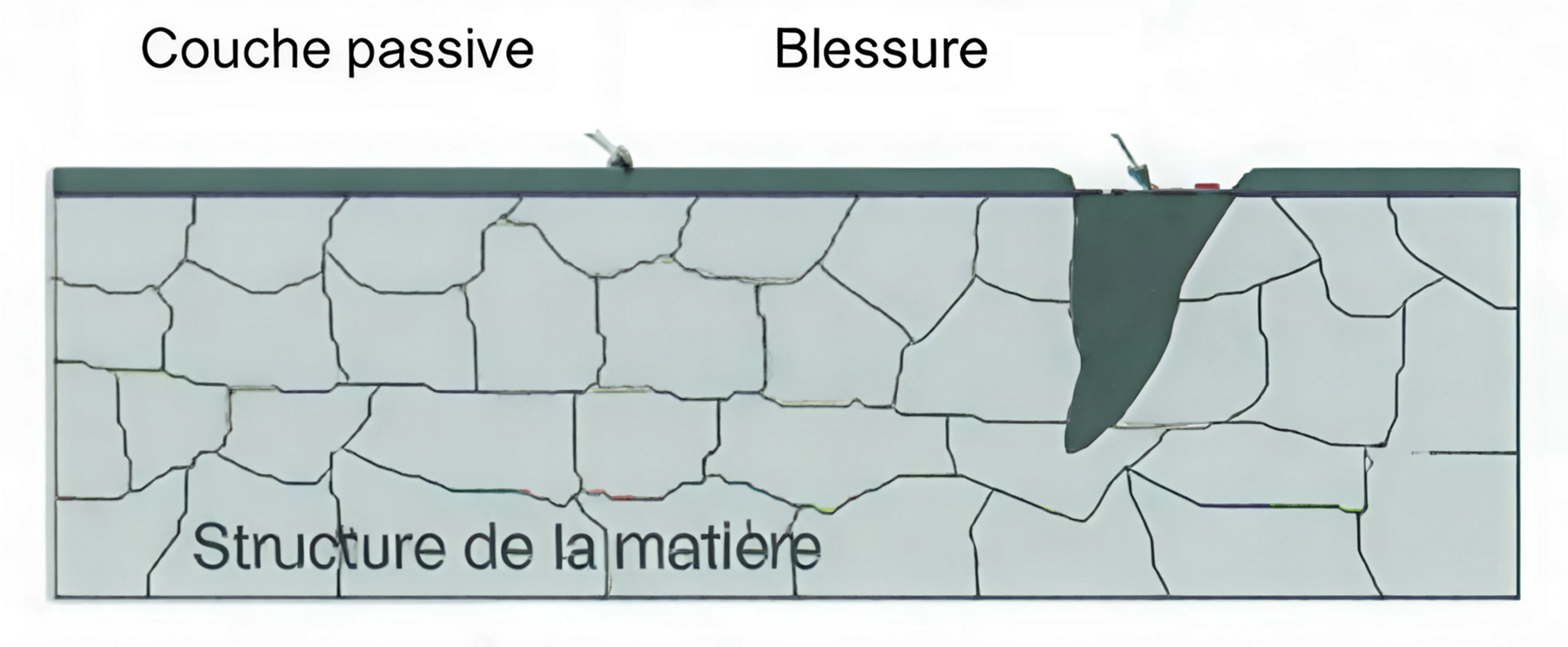
Pitting corrosion is a form of localized corrosion characterized by the formation of small, deep holes on the surface of a metal, often difficult to detect with the naked eye. It occurs when the protective passive layer of a material, such as stainless steel, is locally broken, often due to the presence of chloride ions or other aggressive agents. Unlike uniform corrosion, the damage is concentrated in specific points, which can lead to rapid perforation without widespread thickness loss. This phenomenon is dangerous because it is discreet and can cause sudden leaks or failures. Prevention relies on the use of resistant alloys, careful equipment design, and rigorous monitoring of exposure conditions.
3. Crevice Corrosion
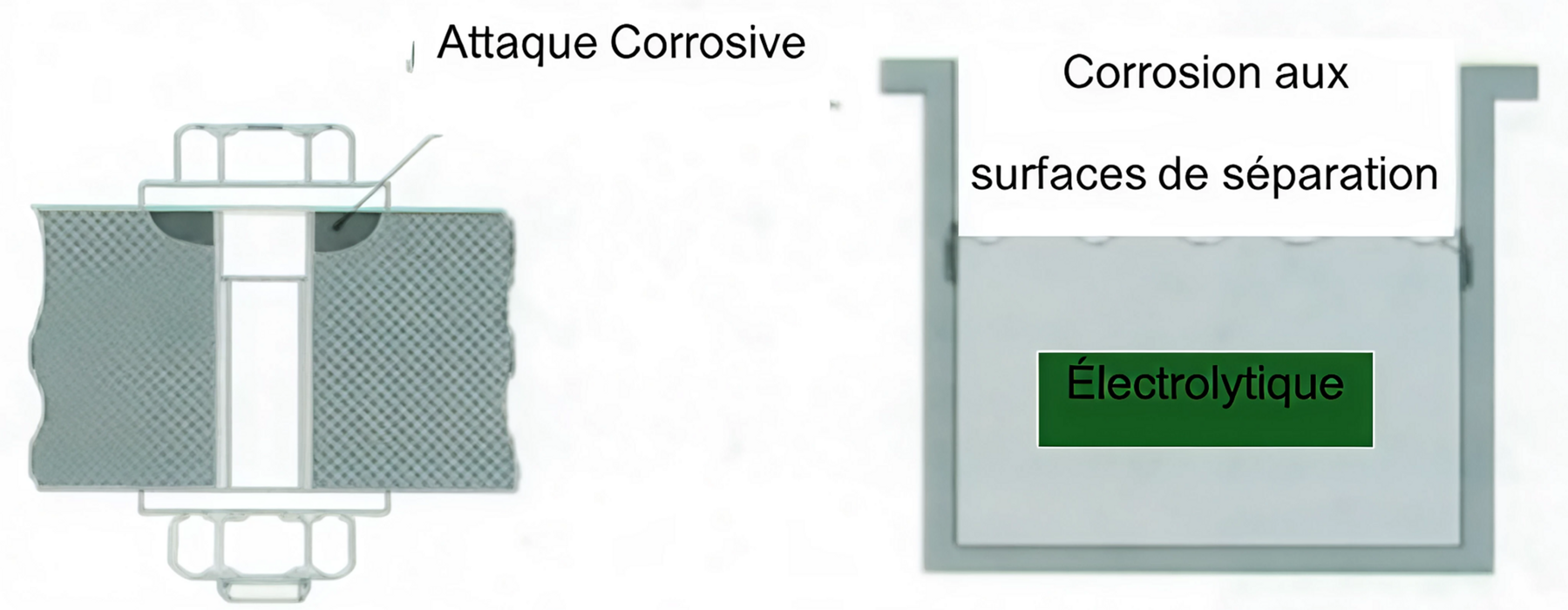
Crevice corrosion is a form of localized corrosion that develops in narrow, confined spaces where access to the surrounding environment (air or liquid) is limited. It often occurs between two metal surfaces in contact, under joints, deposits, or within microscopic cavities. In these areas, fluid stagnation leads to a local drop in oxygen concentration, creating chemically unbalanced conditions that accelerate the corrosive attack. This phenomenon can affect even corrosion-resistant materials, such as stainless steels, when exposed to humid environments containing chlorides. Often difficult to detect, crevice corrosion can lead to rapid and localized degradation, resulting in perforations or loss of mechanical integrity. Prevention relies on designs that avoid crevices, the use of suitable materials, and rigorous maintenance.
4. Galvanic or Contact Corrosion
Galvanic corrosion, also known as contact corrosion, occurs when two dissimilar metals are in electrical contact within a conductive environment, such as an aqueous solution. In this situation, an electrochemical cell forms: the less noble metal (the anode) corrodes more rapidly, while the more noble metal (the cathode) is protected. If stainless steel is coupled with a more active metal, such as aluminum or carbon steel, the latter will degrade quickly, and the stainless steel may also be affected at the point of contact, depending on the conditions. This form of corrosion is common in multi-material assemblies, especially in marine or humid environments. Prevention is based on selecting compatible materials, using electrical insulators (gaskets, washers, sleeves), and controlling the environment to limit moisture or the conductivity of the medium.
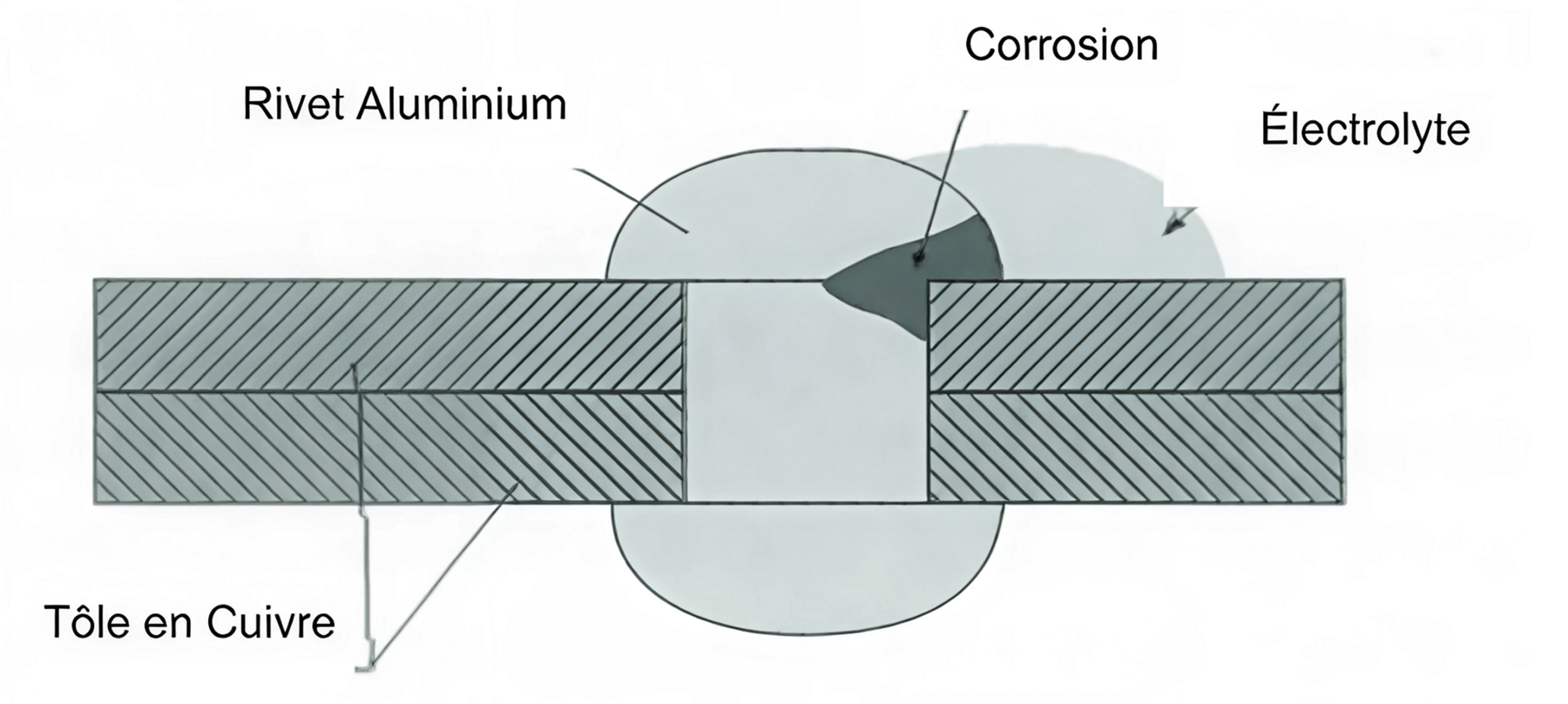
5. Intergranular Corrosion
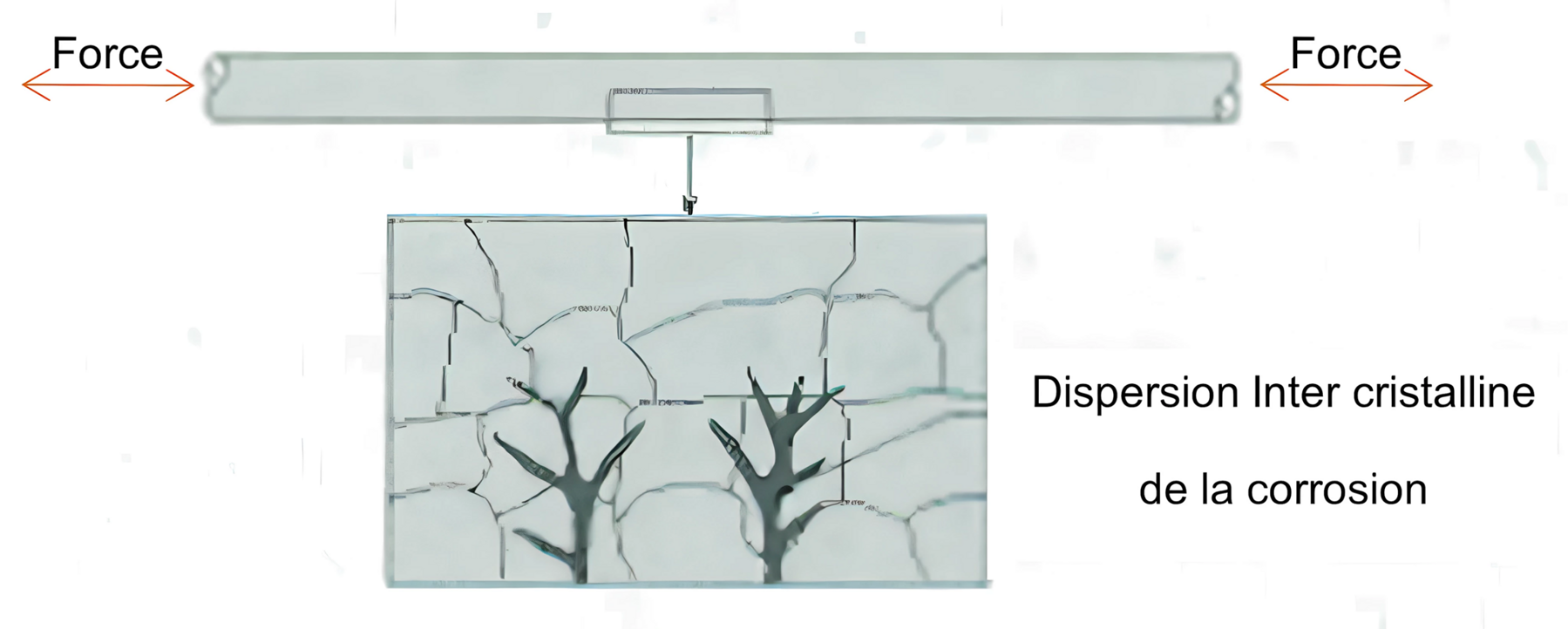
Intergranular corrosion is a type of localized corrosion that occurs along the grain boundaries of the metal's crystalline structure, particularly in stainless steels. It typically happens after exposure to high temperatures (between 450 °C and 850 °C), such as during poorly controlled welding or heat treatment processes. Under these conditions, chromium carbides can precipitate at the grain boundaries, locally depleting the metal of chromium and weakening the protective passive layer. Although the surface may appear intact, the metal becomes vulnerable to rapid internal degradation, potentially leading to sudden mechanical failures. This phenomenon is especially critical in corrosive environments such as acidic or humid conditions. Prevention measures include using stabilized stainless steels (with titanium or niobium), performing solution annealing, and carefully controlling thermal cycles during manufacturing.

6. Stress Corrosion Cracking (SCC)
Stress corrosion cracking (SCC) is a localized degradation phenomenon that occurs when mechanical stresses (either internal or external) are combined with a specific corrosive environment. This type of corrosion leads to the formation of fine, deep cracks in the metal, typically perpendicular to the direction of stress. These cracks can develop slowly, making the degradation difficult to detect until a sudden and catastrophic failure occurs. Materials commonly affected by SCC include stainless steels, aluminum alloys, and certain copper alloys exposed to environments containing chloride ions or alkaline solutions. Prevention relies on reducing residual stresses, using resistant materials, and controlling environmental conditions, particularly limiting exposure to corrosive agents.
7. Fatigue Corrosion
Fatigue corrosion occurs when a stainless steel component is subjected to repeated cyclic loads in a corrosive environment. This phenomenon results from the interaction between repeated mechanical stresses and corrosive agents, leading to the initiation and propagation of microscopic cracks. As these cracks develop, they progressively reduce the material's mechanical strength, eventually causing premature failure of the part. Fatigue corrosion is particularly prevalent in sectors exposed to frequent load cycles, such as the aerospace, maritime, or automotive industries, where mechanical stresses are combined with aggressive environments. Prevention involves reducing stress cycles, choosing materials resistant to fatigue, and optimizing design conditions to minimize exposure to corrosive environments.
8. Erosion Corrosion
Erosion corrosion is an accelerated corrosion phenomenon caused by the mechanical wear of a metal surface, resulting from the repeated impact of a rapidly moving fluid. This fluid, often laden with solid particles such as sand, gas bubbles, or impurities, continuously strikes the metal surface, deteriorating or removing the naturally occurring protective passive layer, particularly on materials like stainless steel. When this protective layer is damaged, the underlying metal becomes directly exposed to the corrosive environment, making it vulnerable to localized or generalized corrosion. Erosion corrosion is particularly problematic in applications where high-speed fluids, such as in pipelines, turbines, or marine engines, are common. Prevention relies on controlling the fluid velocity, using erosion-resistant materials, and applying protective coatings.
9. Erratic Rusting
Erratic rusting refers to the localized and unpredictable appearance of rust spots on the surface of stainless steel, despite its natural corrosion resistance. Unlike generalized or structural corrosion, these spots are generally superficial and do not compromise the integrity of the material. They often result from the presence of external contaminants such as iron particles, industrial greases, or maintenance residues that temporarily disrupt the protective passive layer of stainless steel. These spots may appear in environments where foreign particles or inadequate cleaning conditions are present. Preventing erratic rusting involves thorough cleaning, the use of suitable cleaning products, and regular protection of surfaces against external contaminants.
Treatments to Protect Stainless Steel from Corrosion
Surface treatments play a crucial role in preventing various types of corrosion. Below is an overview of the most commonly used treatments: electropolishing, pickling, and passivation.
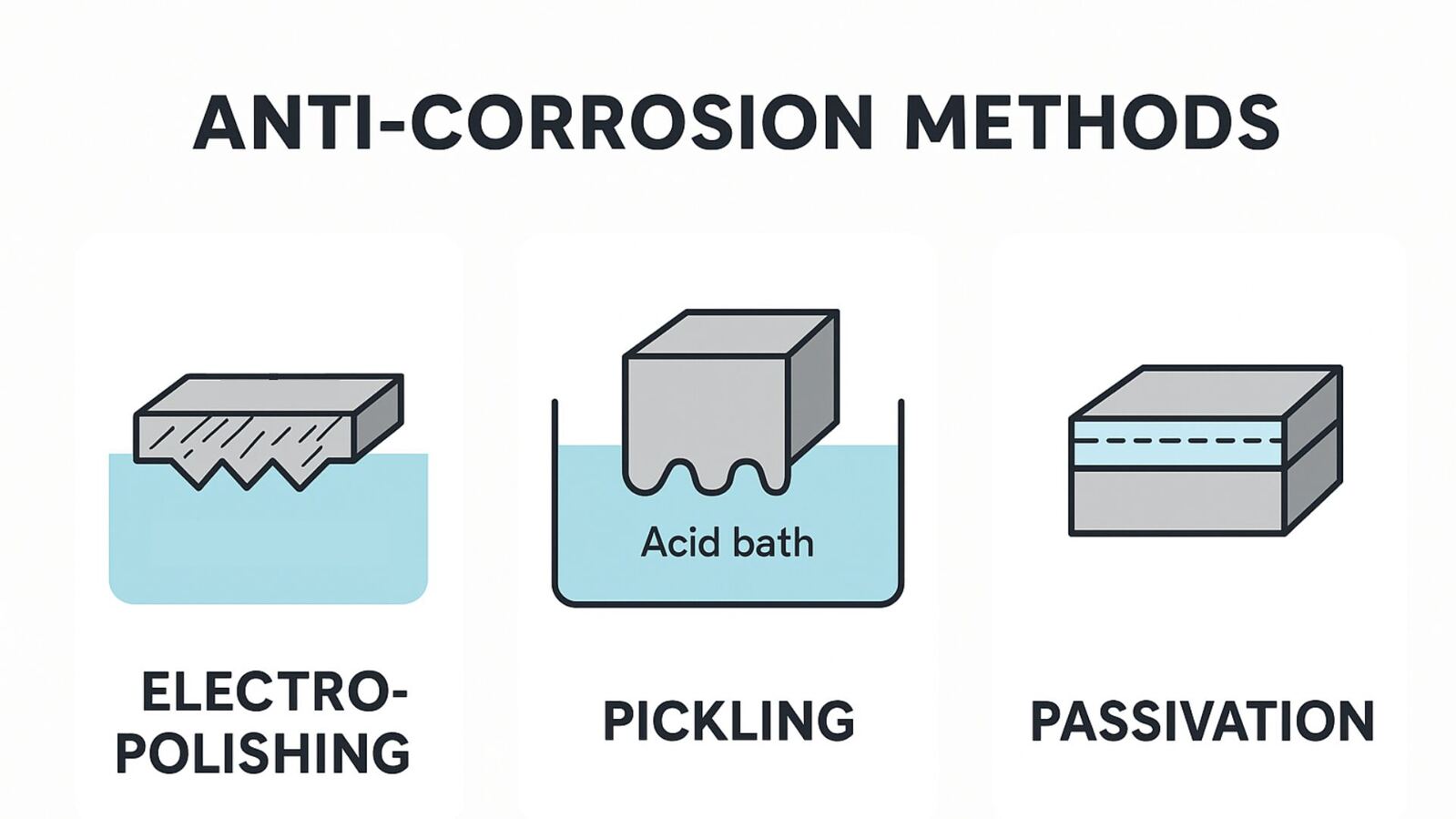
Electropolishing is an electrochemical surface finishing process primarily used on stainless steels. It involves applying an electric current to the metal part in an acidic electrolyte bath, which selectively dissolves the microscopic surface irregularities. This treatment significantly improves the cleanliness, brightness, and, most importantly, the corrosion resistance of the material by enhancing and homogenizing the protective passive layer. Unlike mechanical polishing, electropolishing does not create micro-scratches or residual stresses. It is particularly suited for demanding environments such as the pharmaceutical, food, biomedical, and nuclear industries, where cleanliness and long-term performance are essential.
The quality of the result depends on several parameters: electrolyte composition, temperature, current density, and processing time. Electropolishing is also known for reducing the adhesion of contaminants, thus making cleaning and maintenance of equipment easier.
Method:
Stainless steel is immersed in an electrolyte solution, and an electric current is applied. This creates selective dissolution of surface irregularities, thereby smoothing the metal surface.
Advantages:
Improved corrosion resistance: Electropolishing removes surface contaminants and creates a dense passive layer that protects against corrosion.
Enhanced aesthetics: The process makes the stainless steel surface shiny and aesthetically pleasing, which is appreciated in visible applications (e.g., in the food and pharmaceutical industries).
Reduced contamination buildup: The polished surface is smoother, preventing contaminants from easily adhering.
Disadvantages:
High cost: The electropolishing process can be relatively expensive due to the necessary equipment and chemicals used.
Limited application: This treatment may not be suitable for large surfaces or parts with complex geometries.
Pickling
Pickling is a chemical surface treatment designed to remove metallic oxides, welding residues, and impurities present on stainless steel. It is typically performed using acid solutions, often based on nitric acid or hydrofluoric acid, which selectively attack the altered areas without damaging the sound metal. Pickling restores a chemically clean and active surface, which is essential before applying subsequent treatments such as passivation or electropolishing.
This process is particularly important after thermal or mechanical operations (welding, cutting, forming), as it removes the oxide layers formed at high temperatures, which could otherwise compromise corrosion resistance. Although temporarily aggressive, pickling prepares the metal to optimally reform its protective passive layer.
Used in sectors requiring impeccable surface cleanliness — such as the food, pharmaceutical, and chemical industries — pickling is a crucial pretreatment to ensure the performance and durability of stainless steel equipment.
Method:
Stainless steel is immersed in an acid bath (often based on nitric acid and hydrofluoric acid) to remove oxides and other impurities from the surface.
Advantages:
Thorough cleaning: Pickling effectively removes welding oxides, rust, and other contaminants, leaving a clean surface.
Improved adhesion for subsequent treatments: A clean metal surface enhances the effectiveness of treatments like passivation.
Disadvantages:
Increased corrosion risk: If pickling is not followed by a passivation process, stainless steel can become vulnerable to corrosion.
Use of aggressive chemicals: The process involves the use of potentially hazardous chemicals, requiring special precautions.
Passivation
Passivation is a chemical finishing treatment designed to enhance the naturally occurring chromium oxide passive layer on the surface of stainless steel. This process is performed after operations such as pickling or cleaning. The goal is to chemically clean the surface while promoting the rapid and uniform formation of a stable protective layer that is resistant to corrosion.
Unlike coating treatments, passivation does not add any material to the metal; it only affects the chemical composition of the surface. This treatment is particularly useful after mechanical or thermal operations that may have weakened the natural passive layer.
Passivation is widely used in demanding sectors such as the pharmaceutical, food, and chemical industries, or in environments where hygiene and durability are critical, like humid or aggressive environments. It helps to maximize corrosion resistance, extend the life of equipment, and reduce maintenance needs.
Method:
Stainless steel is treated in an acidic solution (often based on nitric acid) that dissolves impurities and promotes the formation of a protective oxide layer on the surface.
Advantages:
Enhanced corrosion resistance: This treatment creates a denser passive layer, offering protection against pitting corrosion, uniform corrosion, and other forms of degradation.
Extended lifespan of stainless steel: By improving corrosion resistance, passivation extends the life of the treated parts.
Disadvantages:
May be insufficient on its own: In very aggressive environments, passivation alone may not be enough, and it may be necessary to combine it with other treatments, such as electropolishing.
Risk of non-compliance: If passivation is not properly performed, chemical residues may remain on the surface, reducing the effectiveness of the treatment.
Conclusion
Stainless steel corrosion is a complex phenomenon influenced by numerous environmental, mechanical, and chemical factors. Despite its reputation as a "stainless" material, it remains vulnerable to various types of localized or generalized corrosion, each with its own mechanisms, causes, and consequences. Understanding these phenomena is essential for anticipating risks, adapting material choices, and designing durable equipment.
Surface treatments such as electropolishing, pickling, and passivation play a fundamental role in protecting stainless steel. By strengthening or restoring the protective passive layer, these treatments help increase corrosion resistance, improve aesthetics, facilitate cleaning, and prolong the lifespan of installations.
The choice of the most suitable treatment will always depend on the type of environment, mechanical constraints, part geometry, and the level of performance, hygiene, or maintenance expected. A comprehensive and controlled approach, combining a good understanding of materials and best manufacturing practices, is key to fully exploiting the qualities of stainless steel in the most demanding environments.