
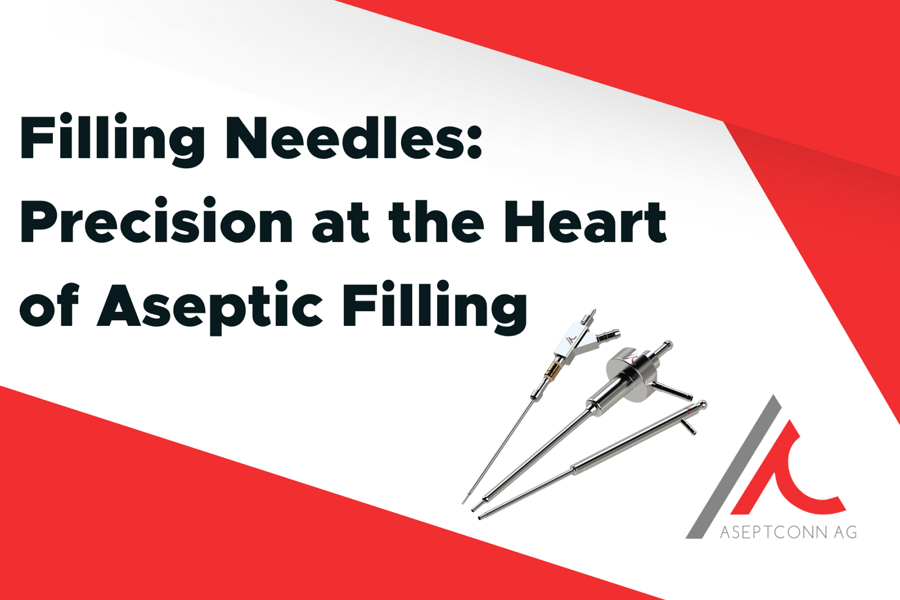
Understanding the Role of Aseptic Filling Needles
An aseptic filling needle is a sterile fluid transfer component designed to dispense precise volumes of product into containers such as vials, syringes, cartridges, bottles, or flexible bags. Its function is not limited to delivering liquid. It must do so while preserving sterility, maintaining dosing accuracy, preventing splashing or aerosol formation, and avoiding damage to the container.
In many modern filling processes, needles also perform secondary tasks. They may enable bottom-up filling to reduce turbulence, introduce inert gas to protect oxygen-sensitive formulations, or assist with vacuum control. As pharmaceutical products become more complex, the needle evolves from a passive conduit into an active process tool.
Why Design Choices Have Major Process Impacts
Small variations in needle design can produce disproportionately large effects on filling performance. A poorly optimized needle may cause foaming, bubble formation, or product loss. It can increase the risk of particle contamination or lead to inconsistent fill volumes. In extreme cases, it may even damage containers or disrupt automated operations, reducing line efficiency and increasing downtime.
Conversely, a well-engineered needle stabilizes the fluid flow and supports gentle, repeatable filling conditions. This is particularly important for biologics and protein-based drugs, which can degrade under mechanical stress. Because fill-finish operations typically occur late in the production chain, failures at this stage are especially costly.
Key Elements of Needle Design
The geometry of the needle tip determines how liquid enters the container. Blunt tips are commonly used for general applications because they reduce the risk of scratching or damaging container surfaces. Beveled tips can facilitate smoother entry of viscous fluids but must be carefully designed to avoid turbulence. Closed-end needles with lateral openings are often preferred for bottom-up filling, as they allow liquid to rise gently from the bottom, minimizing splashing and air entrapment.
Positioning strategy also plays a crucial role. Top filling, where liquid is dispensed from above the product surface, is mechanically simple but can introduce foam or aerosols. Bottom-up filling reduces these effects by allowing the fluid level to rise gradually around the needle, making it the preferred approach for sensitive formulations.
Another important aspect is the internal structure of the needle. While many designs use a single channel, multi-lumen configurations enable simultaneous operations such as liquid filling and gas purging. This is essential for processes requiring controlled headspace conditions, especially when oxidation must be prevented.

Materials Used in Aseptic Filling Needles
Material selection influences durability, compatibility, cleanability, and regulatory acceptance. Reusable needles are typically manufactured from high-grade stainless steel, most commonly 316L. This alloy offers excellent corrosion resistance, mechanical strength, and compatibility with steam sterilization and cleaning processes. When electropolished, stainless steel surfaces become extremely smooth, reducing particle shedding and product adhesion while improving cleanability.
Single-use needles made from high-performance polymers are increasingly adopted in flexible manufacturing environments. Materials such as PEEK or PPSU can withstand sterilization processes while eliminating the need for cleaning validation. This approach reduces cross-contamination risks and shortens changeover times, although polymer components generally have lower mechanical strength and may face temperature limitations.
The choice between metal and polymer solutions depends on the overall manufacturing strategy, including batch size, product portfolio, and facility design.
Surface Quality and Hygienic Requirements
Surface finish is not merely an aesthetic feature but a functional requirement in aseptic processing. Rough surfaces can trap residues, promote microbial adhesion, and generate particles. Pharmaceutical standards therefore demand extremely smooth internal surfaces, often achieved through electropolishing.
Attention must also be paid to weld quality, transitions, and internal geometries. Abrupt changes in diameter or poorly finished joints can create micro-zones where product accumulates or cleaning becomes ineffective. Over time, these areas may compromise sterility assurance or product purity.
Specialized Needle Configurations
Some applications require needles with additional capabilities beyond simple liquid transfer. Gassing needles introduce inert gases such as nitrogen to control oxygen exposure in the container headspace. This is particularly important for formulations sensitive to oxidation.
Other designs incorporate vacuum or suction functions to remove air prior to filling or to stabilize internal pressure. Washing needles may be used during container preparation stages, especially in complex multi-step filling processes. These specialized configurations illustrate how filling needles can actively shape process conditions rather than merely deliver fluid.
Container Compatibility
Different container formats impose distinct technical constraints. Vials often allow bottom-up filling but require precise positioning to avoid contact with the stopper area. Prefilled syringes demand tighter tolerances because even minor misalignment can damage components or affect dosing accuracy. Cartridges introduce additional geometric constraints, making needle length and orientation critical parameters.
Selecting a needle without considering the container interface can lead to mechanical issues, contamination risks, or reduced throughput.
Reusable and Single-Use Approaches
Reusable stainless-steel needles are well suited for large-scale production where long service life and high mechanical robustness are required. They support repeated sterilization cycles but necessitate validated cleaning procedures and maintenance programs.
Single-use needles align with modern flexible manufacturing concepts. By eliminating cleaning steps, they simplify validation and reduce turnaround time between batches. However, they generate more waste and may require careful supply chain management to ensure consistent availability of sterile components.
Neither approach is universally superior. The optimal choice depends on production volume, regulatory strategy, facility design, and sustainability considerations.
When Standard Solutions Are Not Enough
As pharmaceutical products become more specialized, standard needle designs may fail to deliver optimal performance. Highly viscous biologics, ultra-low fill volumes, oxygen-sensitive formulations, or unconventional containers often require custom engineering. Tailored designs can optimize flow dynamics, minimize shear stress, and improve dosing precision, ultimately enhancing product yield and process reliability.
Early involvement of engineering expertise is crucial in such cases. Modifications made during design stages are far less costly than corrective actions after validation or during commercial production.
Conclusion
Aseptic filling needles are small components with system-level influence. Their design affects fluid behavior, sterility assurance, product integrity, and overall manufacturing efficiency. In an industry where batches may represent millions of dollars in value, overlooking this interface can lead to significant technical and financial risks.
Careful selection based on product characteristics, container type, process requirements, and regulatory expectations is therefore essential. As manufacturing technologies evolve toward greater flexibility and complexity, filling needles will continue to play a central role in ensuring safe and efficient sterile production.